Replacing One Tooth — or a Few — the Right Way
Dental implants are the gold standard for replacing missing teeth. Unlike a bridge, which requires shaving down healthy adjacent teeth to create support, a single implant replaces the missing tooth without touching the teeth on either side. It stands on its own, anchored in the jawbone, and functions like a natural tooth.
But placing a single implant well involves more than drilling a hole and inserting a post. The result ten years from now depends on decisions made before the implant ever goes in — about bone volume, tissue architecture, positioning, and emergence profile.
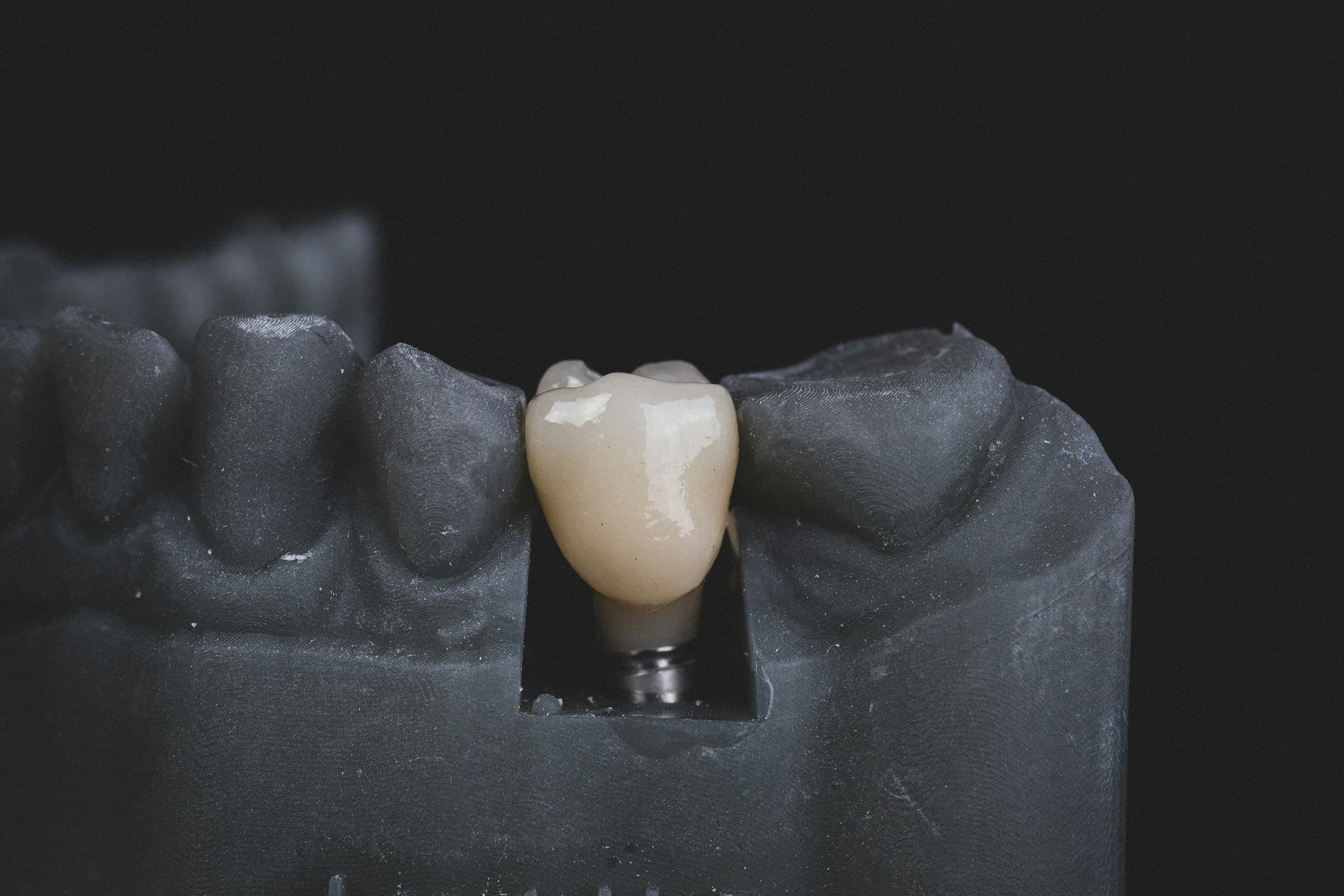
What Makes a Single Implant Last
The long-term success of a dental implant depends on three things working together: the implant itself, the bone supporting it, and the tissue surrounding it.
Modern digital planning allows us to place implants with precision that wasn't possible even a decade ago. We can determine the exact position, angle, and depth before the procedure begins, minimizing trauma to surrounding structures and maximizing the implant's long-term stability.
But placement precision is only one part of the equation. Dr. Weisenberg focuses heavily on tissue support and emergence profile — the way the implant crown emerges from the gumline — because those factors strongly influence both aesthetics and longevity. A crown that looks beautiful at delivery but has inadequate tissue support underneath it will often cause problems down the road.
When Bone or Tissue Needs Support
Not every single implant case is straightforward. If the tooth has been missing for a while, the surrounding bone has likely begun to shrink. If the extraction wasn't handled with bone preservation in mind, there may be a deficit that needs to be addressed before an implant can be placed predictably.
At Wise Dental Solutions, we address those deficits rather than working around them. That might mean a bone graft or a tissue graft before or at the time of implant placement. Taking that extra step typically produces a more stable, more esthetic result — and a restoration that holds up over time the way it should.
“The goal is not just replacing a tooth. It’s recreating something that feels stable, functional, and biologically healthy — the implant, the bone, the tissue, the adjacent teeth, and the bite all working together.”
— Dr. Micah Weisenberg
The Question We Wish Every Patient Would Ask
Before choosing any implant treatment, we encourage patients to ask: “What are the long-term tradeoffs of this approach?”
A lot of dentistry focuses on what things look like immediately after surgery. At Wise Dental Solutions, we want patients thinking further ahead — about maintenance, hygiene access, repairability, bone stability, tissue health, and how the restoration will function five to fifteen years from now.
That question changes the conversation. And it produces better outcomes.
Partial Reconstruction
In cases involving multiple adjacent missing teeth, a partial implant reconstruction can replace several teeth while preserving the natural teeth that remain. This is often preferable to a full-arch approach for patients who still have healthy dentition in part of their mouth, as it avoids unnecessary treatment and keeps the foundation as natural as possible.
We evaluate each situation individually and recommend the approach that makes the most biological sense for that specific patient — not the approach that's easiest to provide.